
Higher Education 4.0 Exhibition and Symposium
Event explores the future of education
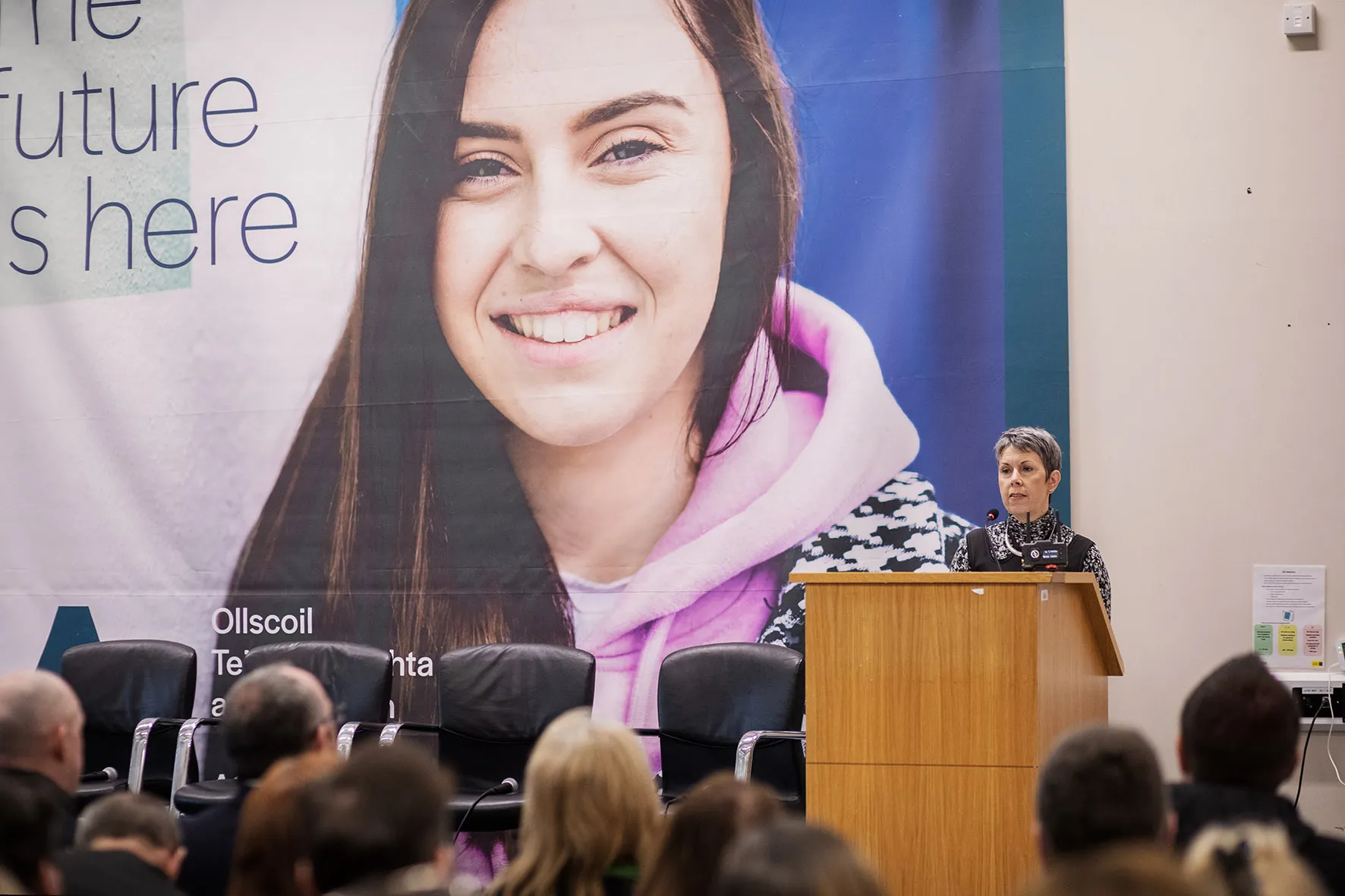
The Higher Education 4.0 Exhibition and Symposium attracted a capacity crowd to Hume Hall, Atlantic Technological University Sligo, in March, with the theme of the event titled ‘Moving from Higher Education 4.0 to Society 5.0’.
The ambitious objective of the symposium was to explore what type of society we are building for future generations; the role that education, employers and policy makers have to play; and, as technology advances at a rapid pace, what role will human skills have to play in Society 5.0?
Greeted on arrival by a MakerSpace demonstration, attendees got an insight into the energy, innovation and enthusiasm generated by the event, while the exhibition stands, representing Career and Learning Pathways and Innovation projects, lining the walls of the main Hume Hall were a hive of activity from early morning.
MC Darrin Morrissey, CEO of NIBRT and Chair of the Higher Education 4.0 Steering Committee, opened proceedings by welcoming ATU President Dr Orla Flynn to deliver the opening address. Dr Flynn reflected on the success of the project to date, particularly the introduction of innovative methods of supporting the lifelong learning ecosystem for ATU students.

Professor Jacqueline McCormack, who is the project lead, gave a comprehensive overview of the progress of Higher Education 4.0 to date, and shared some statistics that outlined the scale of the project beyond what was on show in Hume Hall.
She remarked, for example, that there are over one thousand Reuseable Learning Objects (content) created already under the Higher Education 4.0 project, which is funded by the Human Capital Initiative (HCI) Pillar 3.
The first keynote speaker was Associate Professor Deirdre Hughes. Professor Hughes specialises in careers, employment and skills policies, research, and practice at an international, national and regional level and she gave an inspiring talk on the theme of ‘Navigating the Future: Higher Education 4.0 in the Era of Society 5.0’, which left attendees with plenty to think about.
A lively discussion, directed by Mr Morrissey, followed. Professor Hughes joined the panel of speakers, which also comprised William Beausang, Assistant Secretary, Department of Further and Higher Education, Research, Innovation and Science; Bridie Killoran, ATU Career and Learning Pathways Manager; JP McGonigle, Head of Business Improvement, Forward Emphasis International; and Ciaran Hastings, MyCareerPath student learner and Merit Medical Galway employee.

In the afternoon, the second keynote speaker, Professor George Siemens, spoke about Artificial Intelligence (AI) in education. Professor Siemens is a leading expert in AI and a founding President of the Society for Learning Analytics Research.
Professor Siemens emphasised the importance of universities recognising and planning for the transformations that AI are going to bring to the learning landscape. This was followed by a ‘fireside chat’ with Noel Mulkeen, Higher Education 4.0 Innovation Projects Manager, and a Q&A from the audience, with librarians getting a special mention for their levels of innovation.
A jam-packed schedule also saw the launch of ATU MakerSpace on the Sligo campus. The Higher Education 4.0 project has funded state-of-the-art facilities on three ATU campuses, and these give students better access to cutting edge technology.
A trip to visit the new MakerSpace at ATU Sligo provided a fascinating highlight for many of the industry and employer groups in attendance.
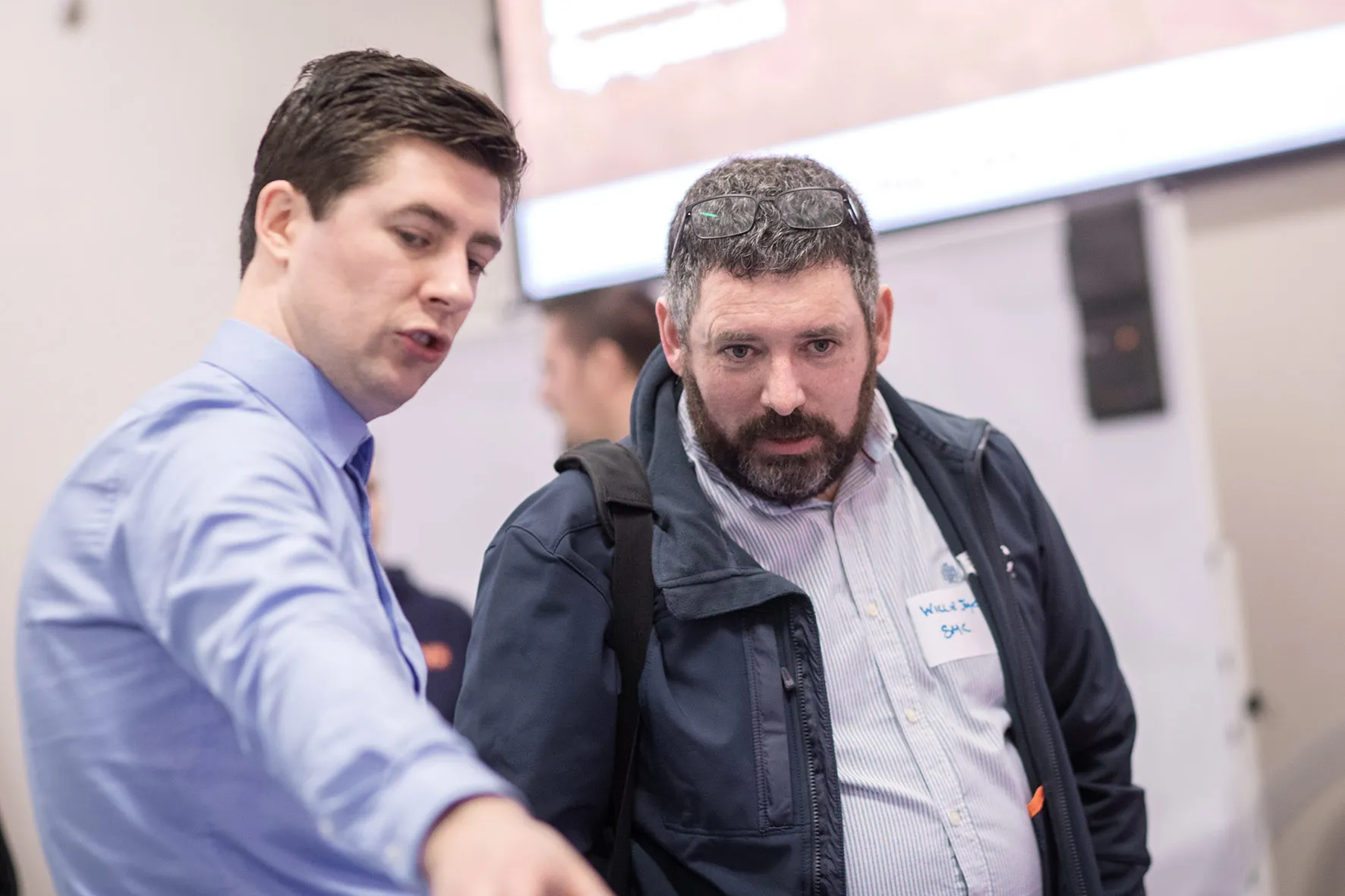
Meanwhile, exhibition stands on the day included: MyCareerPath.ie; ATU MakerSpace; Strengths Path Programme; Social Robotics; Recognition of Prior Learning; VR Courtroom; Innovation Tools for Access Programmes; MOOCs; and Adaptive learning, Project Based Learning.
The Higher Education 4.0 event demonstrated that the spirit of innovation is well and truly alive in ATU and, when combined with a learner and industry centric approach, it underlines the dedication ATU has to serving the community of local, national, and international learners, as well as employers in the ATU region.

