
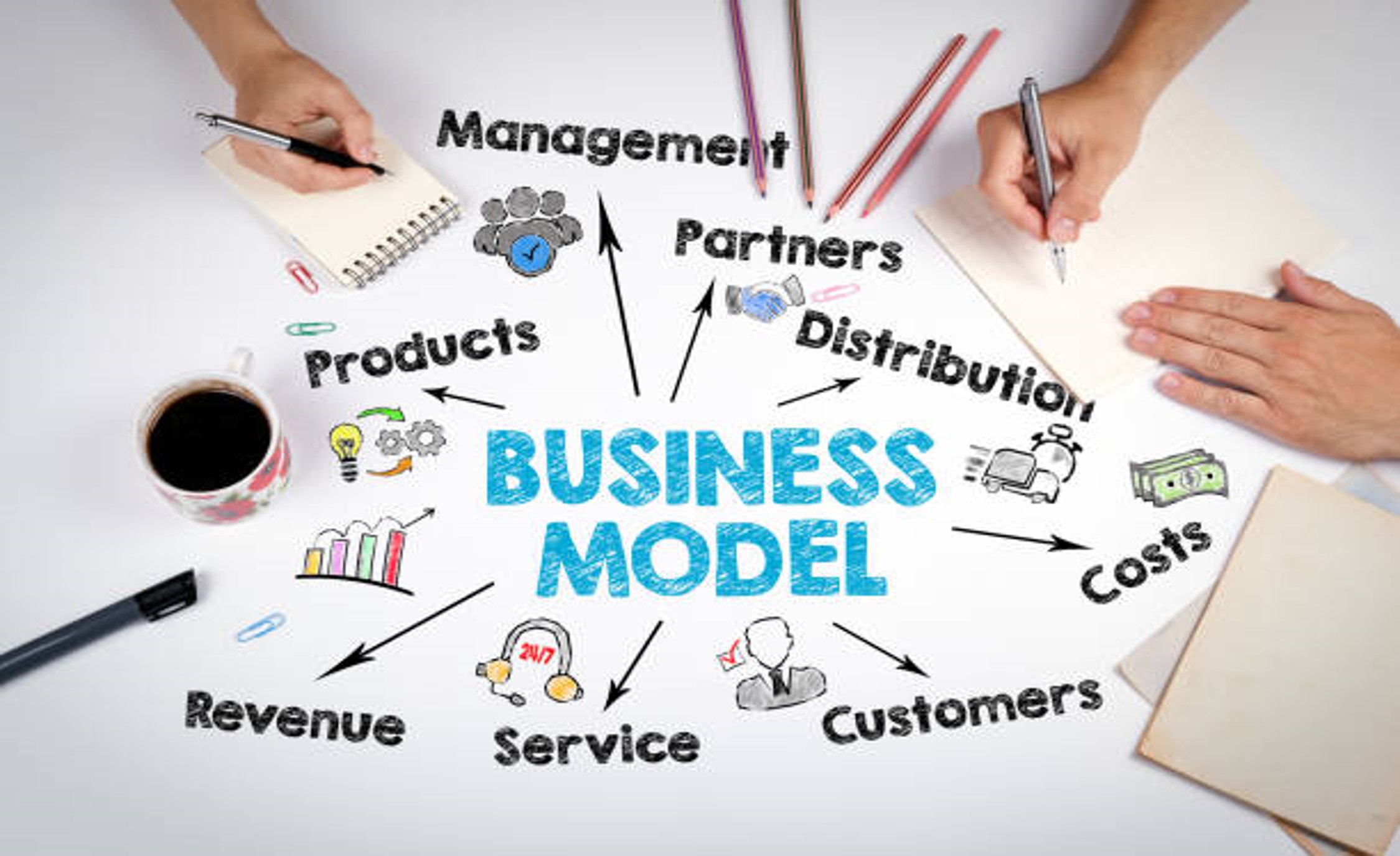
Case Study: Work Based Learning: Business Models and Emerging Technologies
To explore opportunities that changes in information technology in the 21st century provide.
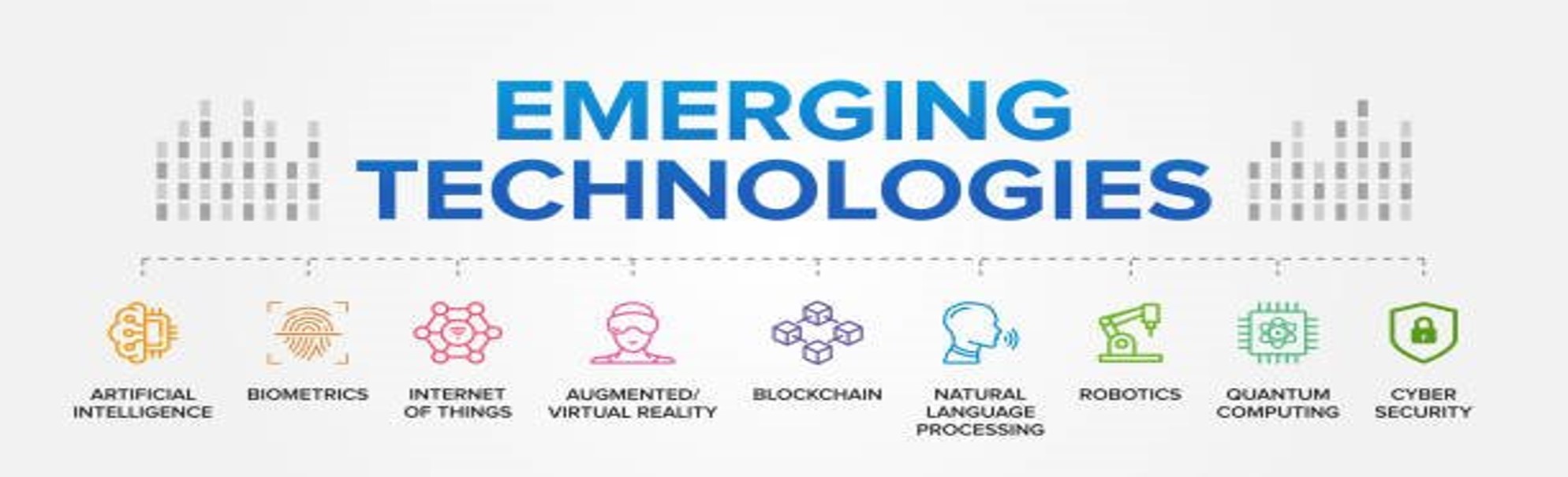
This project will demonstrate to candidates that to succeed in today’s environment, organisations need to improve their ability to capture and analyse an immense amount of data to develop timely customer, competitive, and operational insights.
Businesses and companies need to embed innovation within their core business to continually develop new ways of creating and delivering value to customers in the most cost-effective way.
Finally, they must use the latest technologies as business innovation enablers and create an agile culture, organisation, and asset base to thrive in an environment of change.
History of How the Subproject Came About
In 2021, this subproject was designed by Galway-Mayo Institute of Technology, Institute of Technology Sligo and Letterkenny Institute of Technology, which was part of a collaborative Human Capital Initiative Project (HCI). It was successfully validated in 2022.
It had been agreed that GMIT would take the lead with this subproject. The Heads of Departments worked in collaboration with one another in relation to staff resourcing and timetable scheduling.
Further collaboration at a management level has and continues to take place with the project manager and innovation manager (overseeing this project.
Quarterly reports have been submitted to the project manager. Further collaborations took place with the Career Learning Pathways and Recognition of Prior Learning Manager, together with the Industry Engagement Lead.
In April 2022, all three Institutes merged, and it is now called the Atlantic Technological University (ATU).
Why Undertake this Course
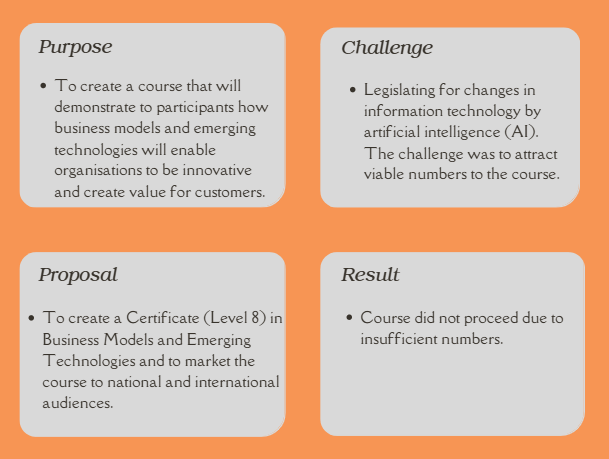
This course, which is part of the Human Capital Initiative (HCI) Pillar 3, will demonstrate to participants how business models and emerging technologies will enable organisations to be innovative and create value for the customer.
The plan is that the course would be delivered mostly online with two experiential workshops.

The Challenge
- The challenge was to seek viable numbers for this sub-project to run.
- The sub-project was due to start in early September 2023.
Solution and Marketing
The sub-project was marketed in the following ways to attract a regional, national and international audience onto the sub project: joint ATU advertising campaign, local newspaper advertisements, online prospectus, brochures, social media advertising, contacting industry stakeholders, face-to-face and Teams meetings with prospective applicants.
We worked with a European agency to promote the sub-project to an international audience. This created 15 international contacts of interest, but unfortunately this did not convert into applications.
The Result
- Checked on the progress of applications.
- Unfortunately, the sub project did not proceed in September 2023, due to insufficient numbers: five applications only.
- The remaining budget for this sub-project was released back.

